
What is a root canal treatment?
When you get a cavity in your tooth that is not filled before it becomes to deep, the cavity can spread to the nerve and blood vessels inside of your tooth.
Bacteria from your mouth is now able to spread through the cavity all the way to the nerve and irritate it.
Your body tries to fight this bacteria by sending white blood cells through the blood vessels inside the tooth to try and kill the bacteria. This causes an inflammation reaction inside your tooth.
An inflammation reaction somewhere else in the body will cause swelling, but because your tooth is a solid structure the pressure caused by the inflammation can not escape.
If the entrance (cavity) to the nerve is not blocked in time, the pressure in the tooth will eventually "suffocate" the nerve in the tooth and the nerve will die. All of this is accompanied with a lot of pain (a throbbing or lingering pain especially when drinking something hot, or when lying down) as you could imagine, or might have experienced. To stop this pain the solution is to do a root canal treatment on the offending tooth.
The next thing that can happen is that if the nerve is killed inside the tooth and still no dental intervention has taken place. The bacteria that can enter the tooth will start to breed inside the warm, moist tooth and feed off of the dead nerve inside. This is an ideal breeding ground for bacteria. This phase is usually not accompanied with much pain, because the nerve is dead and no longer transmitting a pain impulse to the brain.
However, if the bacteria is allowed to breed inside the tooth for long enough, eventually the tooth will become to small for all the bacteria, and the bacteria will begin to extrude out of the tooth through the only two exits:
- the cavity they came in through. (Causing bad breath and a bad taste in the mouth)
- the tip of the root, allowing the bacteria to extrude into the bone and create and abscess. (This phase is usually accompanied with a lot of pain, especially when biting on the tooth or chewing hard foods, and the abscess may also cause a painful, red swelling of the gum around the tooth.)
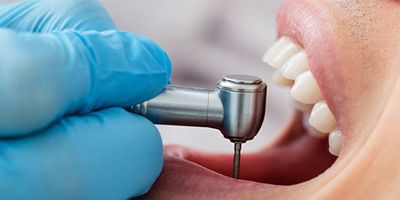
So to get rid of the bacteria your dentist opens up the tooth and cleans the cavity that the bacteria entered through.
Then your dentist will rinse the root canal system where the nerve was with a strong chemical, that kills bacteria.
Medicine is then placed inside the tooth to continue to kill the bacteria and the cavity is closed with a temporary filling.
Once you pain is relieved the dentist will remove the temporary filling and once again rinse the canals and shape them so that they can be sealed with an anti-bacterial filling material that is cemented in the root canal system with a root canal sealer so that no bacteria can live in the tooth again.
Permanent restorations of your now pain-free tooth can be discussed with your dentist after the root canal treatment is completed.